 azmater.com
 Ceramic for Industry
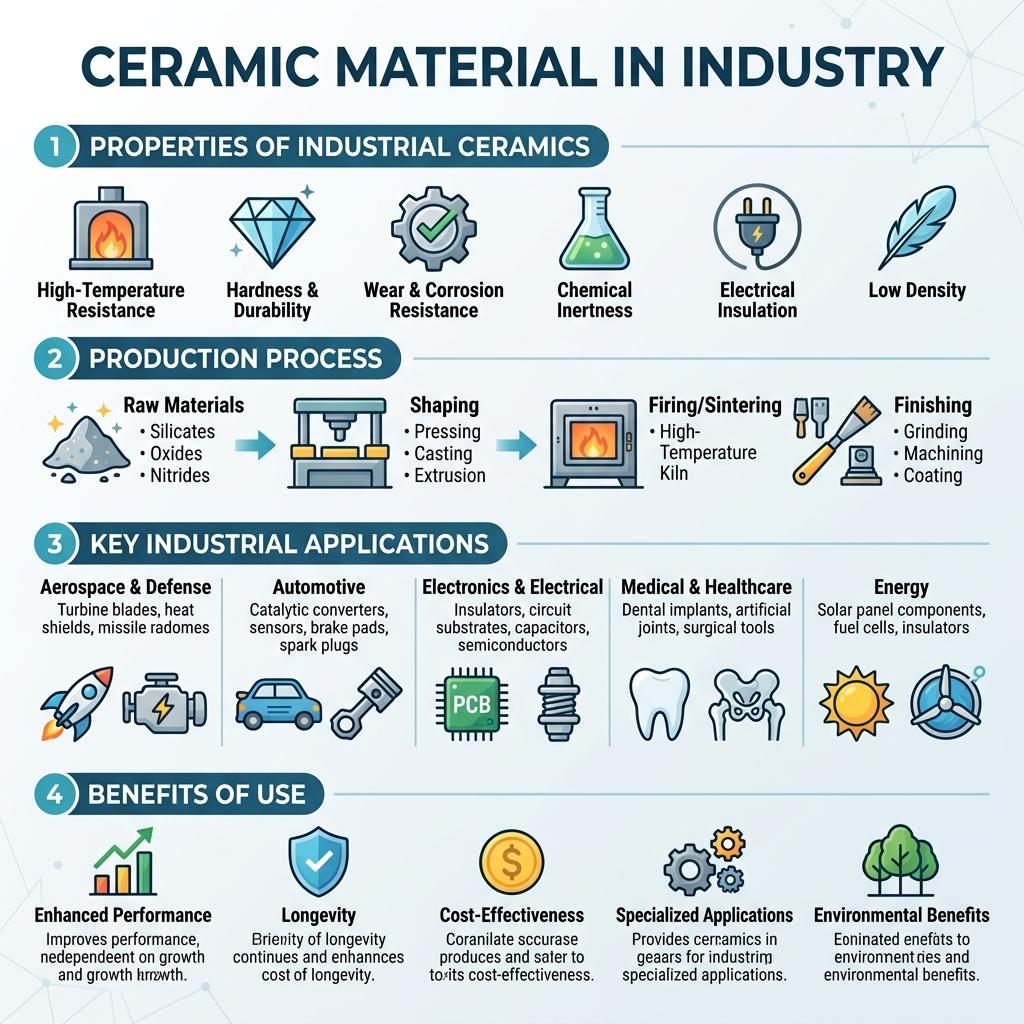
Ceramic materials possess exceptional hardness, thermal resistance, and electrical insulation properties, making them essential in manufacturing, electronics, and aerospace industries. Their crystalline structure provides high durability and resistance to wear and corrosion, suitable for cutting tools and biomedical implants. Advanced ceramics like silicon carbide and alumina are widely used in high-temperature applications due to their ability to maintain structural integrity under extreme conditions. Innovations in ceramic composites continue to enhance performance in energy storage, sensors, and automotive components.
What are the primary classifications of industrial ceramics?
Industrial ceramics are generally classified into three primary categories based on their composition and intended application:
- Traditional Ceramics: Made primarily from natural materials like clay, silica, and feldspar.
- Examples: Refractory bricks, structural tiles, and porcelain.
- Advanced (Technical) Ceramics: Engineered for extreme conditions using highly refined, synthetic powders to achieve precise mechanical and electrical properties.
- Examples: Alumina, zirconia, and silicon nitride.
- Glass-Ceramics: Materials that start as glass and crystallize under controlled heat treatment, offering high thermal shock resistance and zero porosity.
Why are ceramics preferred over metals in high-temperature industrial applications?
Ceramics are chosen over metals for high-temperature applications due to their superior atomic bonding (covalent and ionic), which grants them exceptional thermal stability.
- High Melting Points: Unlike metals that soften or melt, ceramics can easily withstand operating temperatures exceeding 2000°C.
- Oxidation Resistance: Metals often oxidize (rust) at high heat, whereas most advanced ceramics are chemically inert and resist oxidation.
- Thermal Insulation: Certain ceramics act as excellent thermal insulators, protecting surrounding sensitive components from heat damage.
- Creep Resistance: Ceramics maintain their structural shape and strength under prolonged high-temperature stress without deforming.
What is Alumina (Aluminum Oxide) and what are its common industrial uses?
Alumina (Al2O3) is one of the most widely used advanced technical ceramics. It is highly valued for its excellent electrical insulation, high hardness, and resistance to chemical corrosion and wear.
| Industry | Common Applications |
|---|---|
| Electronics | Substrates for microchips, high-voltage insulators, and spark plugs. |
| Manufacturing | Cutting tools, abrasive grinding wheels, thread guides, and wear-resistant liners. |
| Medical | Prosthetic implants (e.g., hip joint replacements) due to its high biocompatibility. |
How are piezoelectric ceramics used in the manufacturing industry?
Piezoelectric ceramics, such as Lead Zirconate Titanate (PZT), possess the unique ability to convert mechanical stress into electrical energy, and vice versa. In modern manufacturing, they are critical for precision control and sensing.
- Ultrasonic Cleaning: They generate high-frequency sound waves to clean delicate or complex industrial components.
- Non-Destructive Testing (NDT): Used in sensors to detect internal micro-flaws in metal pipes and aerospace structures without destroying the part.
- Precision Actuators: They provide microscopic, sub-millimeter adjustments in automated machining and robotics.
- Ultrasonic Welding: Equipment uses these ceramics to join plastics and fine metals through high-frequency vibrations.
What are the main steps involved in the manufacturing process of industrial ceramics?
The fabrication of industrial ceramics typically follows a strict sequence to ensure high density and structural integrity:
- Powder Preparation: Raw materials are milled into ultra-fine powders and mixed with organic binders.
- Forming/Shaping: The powder is shaped into a fragile "green body" using techniques like dry pressing, injection molding, or slip casting.
- Drying: Moisture is carefully and slowly removed to prevent shrinkage cracks.
- Sintering (Firing): The green body is heated to extreme temperatures in a kiln. The particles fuse together, eliminating pores and drastically increasing the material's strength.
- Finishing: Final grinding or polishing is done using diamond-tipped tools to meet exact dimensional tolerances.
What role do advanced ceramics play in the automotive industry?
Advanced ceramics are integral to modern automotive engineering, primarily helping to reduce vehicle weight, improve fuel efficiency, and lower exhaust emissions.
- Catalytic Converters: Cordierite ceramics form the honeycomb structure inside converters, providing a massive surface area for catalysts to neutralize harmful exhaust gases.
- Engine Components: Silicon nitride is used for engine valves and turbocharger rotors due to its low mass and high heat resistance, drastically reducing turbo lag.
- Braking Systems: Carbon-ceramic brake discs offer exceptional stopping power, heat dissipation, and fade resistance in high-performance vehicles.
- Sensors: Ceramic sensors monitor oxygen levels in the exhaust to continuously optimize the engine's fuel-to-air ratio.
Compare the mechanical properties of advanced ceramics versus polymers.
Advanced ceramics and polymers serve very different industrial roles due to their contrasting mechanical and physical properties.
| Property | Advanced Ceramics | Polymers (Plastics) |
|---|---|---|
| Hardness | Extremely high (scratch and wear-resistant) | Generally low (easily scratched) |
| Thermal Resistance | Excellent (survives well over 1000°C) | Poor (melts or degrades at low temperatures) |
| Brittleness | High (prone to shattering upon impact) | Low (highly flexible, elastic, and tough) |
| Electrical | Excellent insulators; some are semiconductors | Good insulators, but degrade under high voltage |
How do thermal barrier coatings (TBCs) benefit gas turbine engines?
Thermal Barrier Coatings (TBCs) are highly advanced ceramic layers, most commonly made from Yttria-Stabilized Zirconia (YSZ), applied to metallic parts within gas turbine engines.
- Temperature Reduction: TBCs act as powerful insulators, dropping the surface temperature of the underlying metallic turbine blades by 100°C to 300°C.
- Increased Efficiency: Because the metal is shielded from extreme heat, the engine can safely operate at much higher combustion temperatures, which significantly increases thermodynamic efficiency and power output.
- Extended Lifespan: By protecting engine parts from thermal fatigue, rapid oxidation, and hot corrosion, TBCs prolong the operational life of highly expensive aerospace components.
What are the main limitations or disadvantages of using ceramic materials in industry?
Despite their exceptional thermal and wear properties, industrial ceramics possess specific limitations that dictate how and where they can be used:
- Extreme Brittleness: Ceramics entirely lack ductility. They cannot absorb impact energy or deform under stress, making them highly susceptible to sudden, catastrophic shattering when struck.
- Machining Difficulty: Because they are harder than almost all metals, finishing sintered ceramics requires expensive diamond grinding tools, extending manufacturing time and costs.
- Thermal Shock Vulnerability: While some handle heat well, others will crack if subjected to rapid, drastic temperature changes due to internal expansion stresses.
- High Production Costs: The highly refined raw materials and extreme-temperature sintering processes require significant energy and financial investment.
What is Silicon Carbide (SiC) and where is it applied?
Silicon Carbide (SiC) is a highly durable, lightweight synthetic ceramic material renowned for its extreme hardness, excellent thermal conductivity, and low thermal expansion.
| Application Area | Function / Use Case |
|---|---|
| Semiconductors | Used in power electronics and EV inverters due to its ability to handle high voltages and high temperatures much better than traditional silicon. |
| Abrasives | Widely utilized in sandpaper, grinding wheels, and cutting tools due to its diamond-like hardness. |
| Defense | Manufactured into lightweight, bullet-resistant composite armor plates for military vehicles and personnel. |
| Kiln Furniture | Serves as load-bearing shelving in high-temperature industrial kilns due to its supreme thermal shock resistance. |