 azmater.com
 Stone for Industry
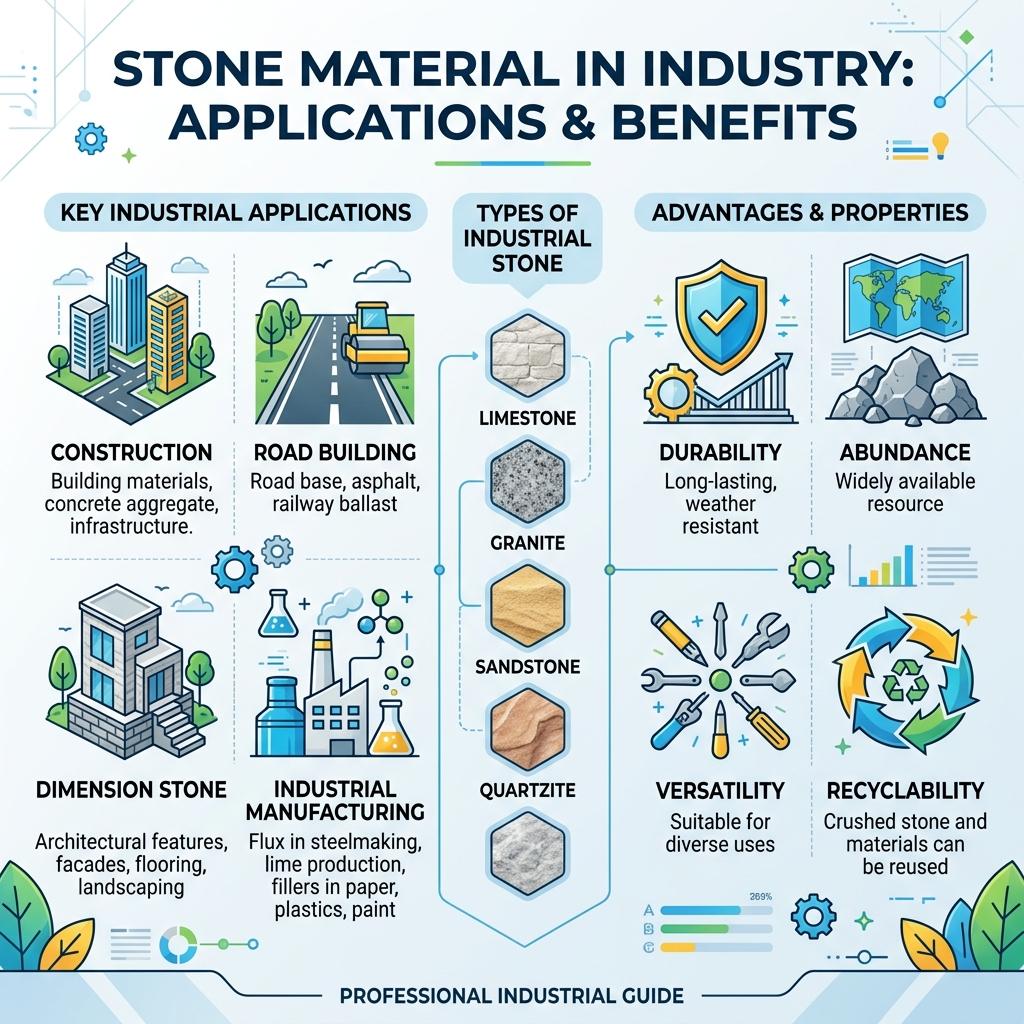
Stone is a naturally occurring solid composed of minerals or mineraloids, extensively used in construction and sculpture. Its durability and aesthetic appeal make it a preferred material for buildings, monuments, and paving surfaces. Types of stone, such as granite, limestone, and marble, offer diverse textures and colors suited for various architectural styles. Quarrying and cutting techniques enhance stone's adaptability for both structural and decorative purposes.
What are the primary classifications of natural stone used in construction?
Natural stones used in the construction industry are broadly classified into three geological categories based on their formation process:
- Igneous Rocks: Formed through the cooling and solidification of magma or lava. They are extremely hard, dense, and durable. Examples: Granite, Basalt.
- Sedimentary Rocks: Formed by the accumulation and consolidation of mineral and organic sediments over thousands of years. Examples: Limestone, Sandstone.
- Metamorphic Rocks: Formed when existing rocks are subjected to intense heat and pressure beneath the earth's surface, altering their physical structure. Examples: Marble, Slate, Quartzite.
What are the main physical properties to consider when selecting stone for industrial use?
Selecting the right stone requires evaluating specific physical properties to ensure structural integrity and longevity in industrial applications:
| Property | Industrial Importance |
|---|---|
| Compressive Strength | Determines the stone's ability to withstand heavy loads without crushing, crucial for foundations and load-bearing walls. |
| Porosity & Absorption | Low porosity prevents water intrusion, chemical degradation, and freezing/thawing damage. |
| Hardness | Resistance to scratching and abrasion, which is essential for flooring and paving materials. |
| Specific Gravity | Indicates the density and weight of the stone, affecting transport costs and structural load calculations. |
How is granite typically used in the construction industry?
Granite is an igneous rock prized for its exceptional hardness, low porosity, and aesthetic appeal. Its industrial applications are vast and can be categorized into specific uses:
- Heavy Engineering: Due to its immense compressive strength, it is highly sought after for bridge piers, retaining walls, dams, and monumental structures.
- Building Cladding: Polished granite slabs are widely used as exterior facades for commercial buildings to provide long-lasting weather resistance.
- Interior Applications: It is heavily utilized for commercial countertops, stair treads, and high-traffic flooring due to its high resistance to scratching and staining.
What is the difference between marble and limestone in industrial applications?
While marble is a metamorphic rock formed directly from limestone, their industrial uses differ significantly due to their distinct physical structures:
| Feature | Limestone | Marble |
|---|---|---|
| Characteristics | Generally softer, duller, and highly porous. | Denser, capable of taking a high polish, with distinct veining. |
| Primary Industrial Uses | Manufacture of Portland cement, crushed aggregate for road bases, and basic building blocks. | High-end architectural cladding, decorative flooring, countertops, and sculptural work. |
| Chemical Resistance | Highly vulnerable to acid and industrial pollution. | Also vulnerable to acids, but its density and surface polish offer slight initial protection. |
What are the common methods for quarrying natural stone?
Quarrying is the process of extracting stone from the earth. The method chosen depends heavily on the stone's hardness and its intended industrial application:
- Drilling and Blasting: Used primarily for extracting crushed stone (aggregates). Explosives are placed in drilled holes to shatter the rock.
- Wire Sawing: A continuous loop of diamond-studded wire cuts large, clean blocks of hard stone like granite or marble with minimal material waste.
- Channelling: Specialized machines drive chisels into softer stones (like limestone) to cut precise blocks without causing internal micro-fractures.
- Wedge and Feather: A traditional manual technique where metal wedges are hammered into drilled holes until the stone splits cleanly along natural fault lines.
How does weathering affect building stones in industrial environments?
Stones exposed to outdoor industrial environments are subject to severe weathering processes that can eventually compromise their structural integrity:
- Physical Weathering: In cold climates, water enters the stone's microscopic pores and freezes. The subsequent expansion causes "freeze-thaw" cycles that crack and spall the stone surface.
- Chemical Weathering: Industrial pollution creates acid rain. This reacts heavily with calcareous stones like limestone and marble, chemically dissolving the calcium carbonate matrix.
- Biological Weathering: The growth of moss, lichen, and plant roots in surface cracks can physically pry the stone apart and release organic acids that degrade the minerals.
What is engineered stone, and how does it compare to natural stone?
Engineered stone is a composite manufactured material, typically made by combining crushed natural quartz (about 90-95%) with polymer resins and pigments.
In industrial and commercial applications, engineered stone offers specific advantages over natural stone. Because of the resin binder, it is entirely non-porous, meaning it does not require sealing and is highly resistant to stains, bacteria, and chemical spills. Furthermore, it offers consistent color and patterning, which is difficult to achieve across large quantities of natural stone. However, it generally has a lower heat resistance than natural granite due to the susceptibility of the polymer resins to high temperatures.
What are the standard surface finishes applied to commercial stones?
The surface finish applied to a stone drastically alters its appearance, slip resistance, and maintenance requirements. Common industrial finishes include:
- Polished: Creates a highly reflective, smooth surface that highlights the stone's color and natural veining. Common for interior cladding.
- Honed: Provides a smooth, matte finish without the shine. Excellent for high-traffic floors as it is less slippery and hides scratches well.
- Flamed: The stone is exposed to a high-temperature flame, causing the surface crystals to pop. This creates a rough, highly slip-resistant texture perfect for exterior paving.
- Bush-Hammered: Achieved by pounding the stone with a masonry tool, creating a uniformly pitted, textured surface used for exterior safety pathways.
What role does crushed stone play in civil engineering?
Crushed stone is the most heavily utilized mined material in the world. It serves as the foundational backbone of civil engineering and infrastructure projects:
- Concrete Aggregate: It acts as the primary structural filler in cement concrete, providing bulk, volume, and compressive strength to buildings and bridges.
- Road Base and Asphalt: Used as the foundational sub-base for road construction to distribute vehicle loads evenly, and mixed with bitumen to create durable asphalt surfaces.
- Railway Ballast: Large, angular crushed stones are packed beneath and around railway tracks to facilitate water drainage, prevent vegetation growth, and bear the massive dynamic loads of passing trains.
How is the sustainability of industrial stone evaluated?
The modern construction industry increasingly evaluates stone based on environmental impact and lifecycle sustainability. Key evaluation factors include:
- Embodied Energy: The total energy consumed during quarrying, processing, and transportation. Natural stone generally has a significantly lower embodied energy than heavily processed materials like concrete or steel.
- Durability and Lifespan: Stone's exceptionally long lifecycle reduces the need for maintenance and replacement, offsetting initial extraction impacts over time.
- Local Sourcing: Transporting heavy stone generates significant carbon emissions. Utilizing locally quarried stone drastically improves a project's sustainability profile.
- Recyclability: At the end of a building's life, stone components can be salvaged for architectural reuse, or crushed down into aggregate for new infrastructure, ensuring zero waste.