 azmater.com
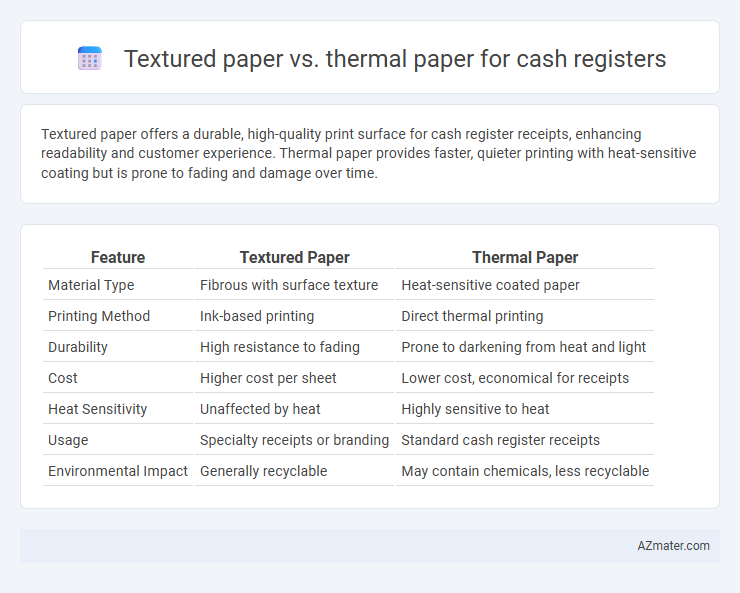
 Textured paper offers a durable, high-quality print surface for cash register receipts, enhancing readability and customer experience. Thermal paper provides faster, quieter printing with heat-sensitive coating but is prone to fading and damage over time.
Table of Comparison
| Feature | Textured Paper | Thermal Paper |
|---|---|---|
| Material Type | Fibrous with surface texture | Heat-sensitive coated paper |
| Printing Method | Ink-based printing | Direct thermal printing |
| Durability | High resistance to fading | Prone to darkening from heat and light |
| Cost | Higher cost per sheet | Lower cost, economical for receipts |
| Heat Sensitivity | Unaffected by heat | Highly sensitive to heat |
| Usage | Specialty receipts or branding | Standard cash register receipts |
| Environmental Impact | Generally recyclable | May contain chemicals, less recyclable |
Introduction: Understanding Cash Register Paper Types
Cash register paper types primarily include textured paper and thermal paper, each serving different functional needs. Textured paper offers a traditional print surface compatible with impact printers, providing durable, smudge-resistant receipts suitable for long-term record keeping. Thermal paper, coated with heat-sensitive layers, enables high-speed printing with thermal printers, delivering clear, crisp images but requires protection from heat and light to prevent fading.
What is Textured Paper?
Textured paper features a raised or patterned surface designed to enhance tactile feel and print clarity, commonly used in cash registers for improved durability and resistance to smudging. Unlike thermal paper, which relies on heat-sensitive coating for printing, textured paper supports ink-based printing methods, offering better longevity and compatibility with various printer types. This makes textured paper ideal for receipts requiring longer-term preservation and professional presentation in retail environments.
What is Thermal Paper?
Thermal paper is a heat-sensitive paper used in cash registers and receipt printers that produces images through thermal transfer rather than ink. It is coated with a chemical that changes color when exposed to heat, enabling fast, quiet printing without the need for ribbons or cartridges. Compared to textured paper, thermal paper offers clearer print quality, higher speed, and cost-efficient maintenance, making it ideal for retail environments.
Printing Technology: Impact on Paper Choice
Textured paper and thermal paper differ significantly in printing technology, influencing their suitability for cash register use. Textured paper relies on impact printers that use ribbons and physical pressure, providing durable prints resistant to smudging but requiring periodic ribbon replacement. Thermal paper uses heat-sensitive coatings activated by thermal printheads, offering faster, quieter printing but is more susceptible to fading over time and environmental factors.
Durability and Longevity Comparison
Textured paper for cash registers offers enhanced durability due to its thickness and resistance to smudging and tearing, making it suitable for long-term receipt handling. Thermal paper generally provides quicker, clearer print quality but is more prone to fading over time and sensitive to heat and light exposure. Choosing between textured and thermal paper depends on the need for longevity versus cost-efficiency and print speed in retail environments.
Cost Efficiency Analysis
Textured paper typically incurs higher production costs due to its embossed surfaces, increasing overall expenses for cash register receipts compared to thermal paper, which uses heat-sensitive coatings and eliminates the need for ink ribbon replacements. Thermal paper offers cost efficiency by reducing maintenance and supply costs, resulting in lower long-term operational expenses for businesses. However, textured paper may provide improved durability and print quality, potentially justifying higher initial costs in certain retail environments.
Environmental Impact and Sustainability
Textured paper used in cash registers typically involves higher environmental impact due to increased fiber use and chemical treatments, making it less sustainable compared to thermal paper. Thermal paper, while often coated with BPA or BPS, generally requires less energy and water in production, resulting in lower overall carbon emissions. Sustainable options include BPA-free thermal paper and recycled textured paper, both contributing to reduced waste and environmental harm.
Print Quality and Readability
Textured paper offers enhanced print quality by providing a non-glossy surface that reduces smudging and increases ink absorption, resulting in sharper and more durable receipts. Thermal paper, while popular for cash registers due to its speed and cost-effectiveness, tends to have lower print longevity and can fade over time, especially when exposed to heat or light. Readability on textured paper remains consistent under various lighting conditions, whereas thermal paper receipts may become difficult to read after prolonged exposure or handling.
Security Features and Tamper Resistance
Textured paper for cash registers offers enhanced security features through built-in watermarks, microtext, and tactile patterns that deter counterfeiting and unauthorized duplication. Thermal paper, while efficient for fast printing, generally lacks advanced tamper-resistant elements and is susceptible to fading and heat damage, which can compromise receipt integrity. Utilizing textured paper significantly improves fraud prevention and ensures transaction authenticity with durable, highly secure printing technology.
Choosing the Right Paper for Your Business
Textured paper offers a premium feel and enhanced durability for cash register receipts, making it ideal for businesses seeking a professional presentation and longer-lasting records. Thermal paper, known for its cost-effectiveness and compatibility with high-speed thermal printers, suits businesses prioritizing efficiency and clear, smudge-free printing in high-volume transactions. Selecting the right paper depends on balancing factors such as print quality, durability, cost, and the specific needs of your business environment.
Infographic: Textured paper vs Thermal paper for Cash register